

Swimming pool system design is a critical step that should never be overlooked. It is the core foundation that ensures your pool operates safely and remains easy to maintain in the long term.
From piping and filtration to sanitization and pool lighting systems, every component requires careful planning by experienced professionals. Selecting the right equipment and working with a specialized pool design company will ensure optimal performance while achieving both functional efficiency and aesthetic appeal.
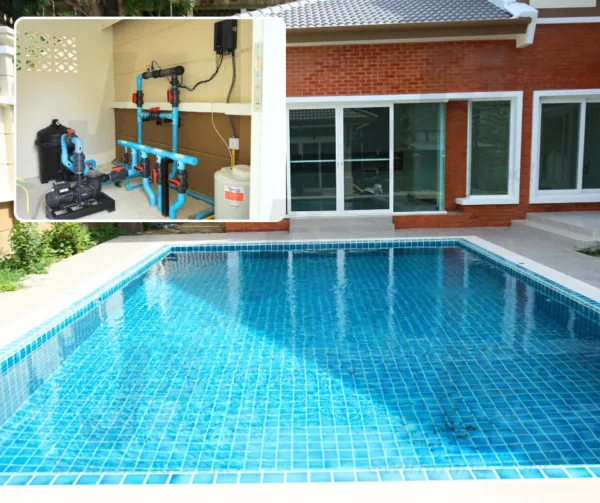
The piping system serves as the main network that controls water circulation within the pool, including drawing water into the filtration system and returning it back to the pool.
A well-designed piping system helps reduce pressure loss, minimize noise, and improve overall efficiency. Our team carefully calculates pipe sizes, designs optimal routing, and determines the precise placement of suction and return outlets to suit the pool’s size and shape.
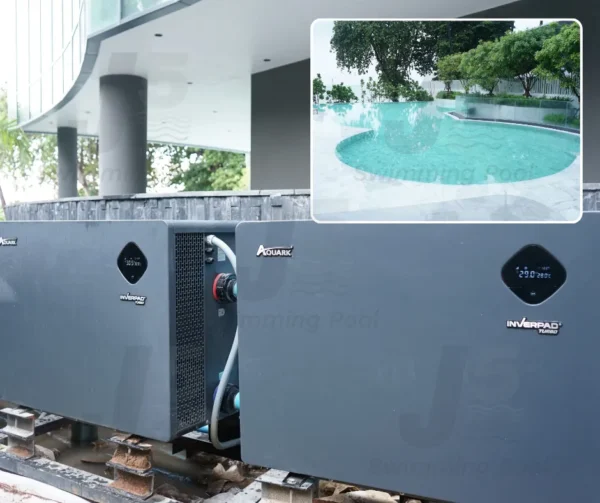
Modern swimming pools increasingly rely on advanced equipment and automation to simplify maintenance and enhance performance.
This includes timer-controlled pump operation, automatic pH monitoring and chemical dosing systems, as well as smart control via mobile applications. A properly designed equipment system ensures convenience, improves efficiency, and reduces long-term operating costs.
Automation plays a key role in modern pool management. Control systems can integrate functions such as scheduled pump operation, water quality monitoring, chemical dosing, and remote access via mobile applications.
A well-designed control system allows pool owners to manage their pool effortlessly, save time, and significantly reduce maintenance costs while ensuring consistent water quality.
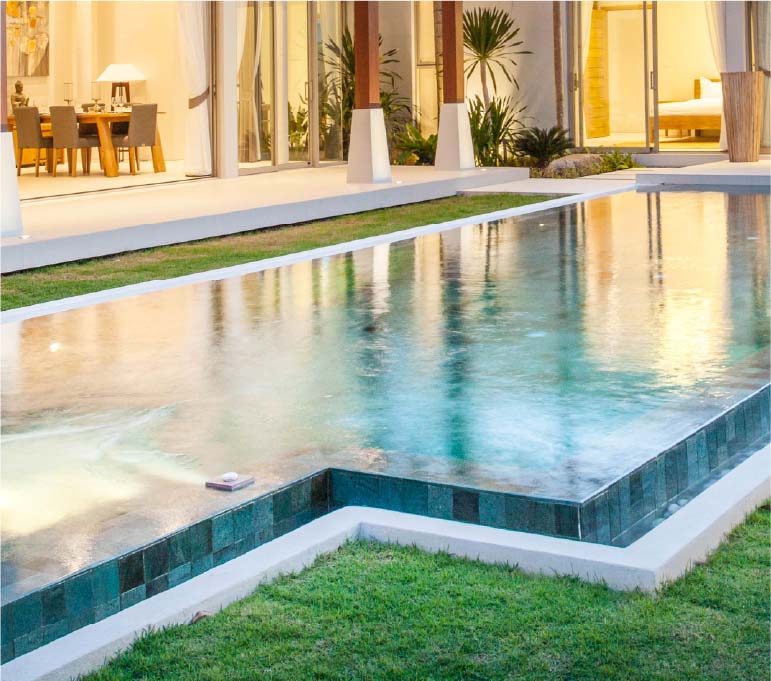
Water circulates by overflowing from
the pool into an overflow channel
installed around its perimeter.
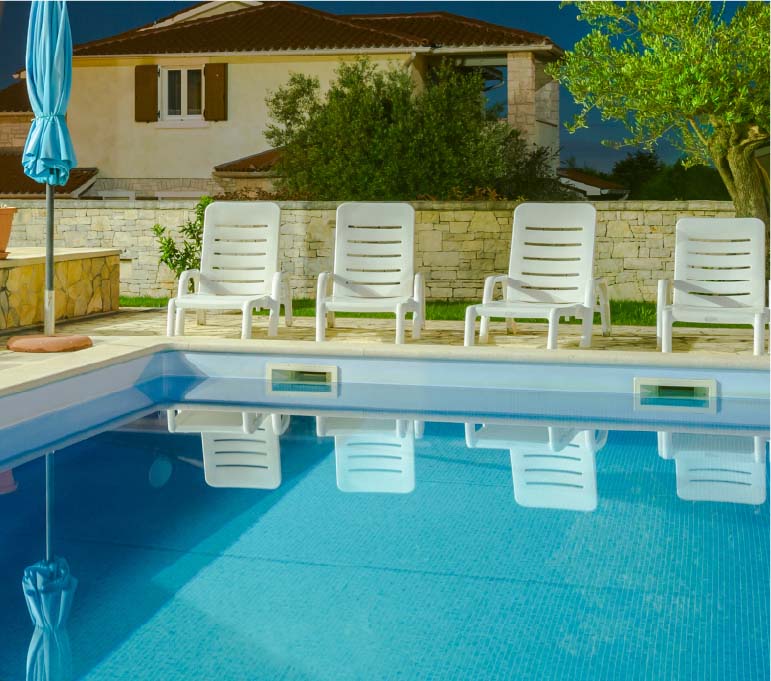
Suitable for small swimming pools.
The water level must be 15–20 cm
below the pool edge.
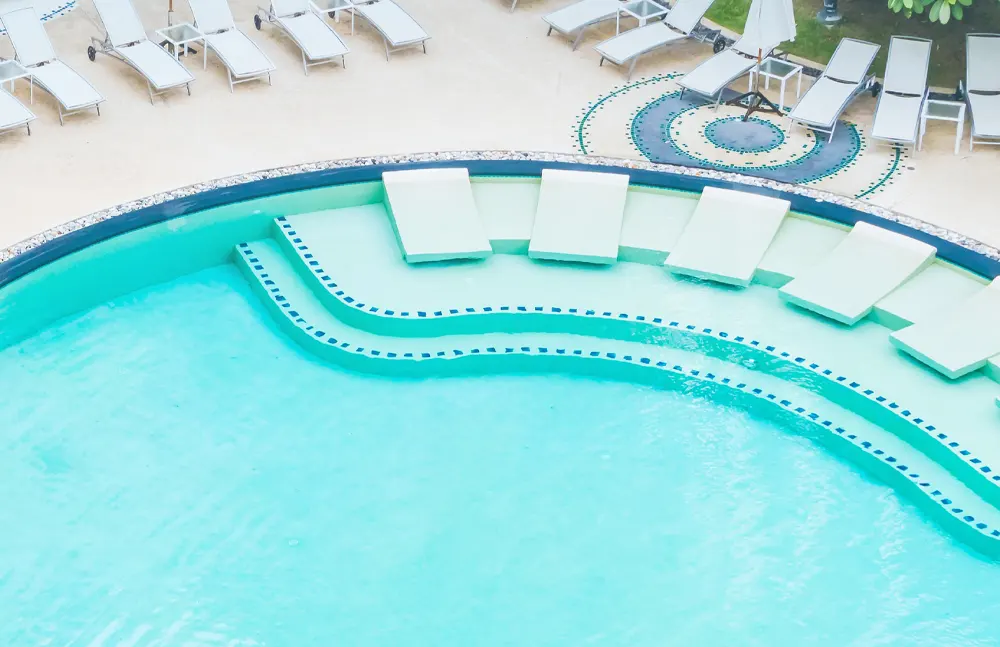
An Overflow Pool System is a popular choice for pool owners who prefer a modern, attractive design. The water sits level with the pool edge, giving the pool a clean appearance. Water is pushed upward and flows evenly over the edge, carrying surface debris away.
In an overflow system, water enters through inlets in the pool floor and pushes debris toward the overflow channel around the pool. It then flows into a surge tank. From there, a pump draws the water through the filtration and sanitization systems before returning the treated water to the pool.
A Skimmer Pool System circulates water through a device called a skimmer box, which is installed along the pool wall near the edge. This type of pool does not require a surge tank, so it takes up less space and can cost less to build and operate than an overflow pool.
In a skimmer system, water is drawn through the skimmer opening, which collects debris from the surface. The water then passes through the filtration and sanitization systems before returning to the pool. The water level sits approximately 15–20 cm below the pool edge. Some owners may find this less visually appealing, and debris may remain on the pool floor or in areas of the water surface that the skimmer does not reach effectively.
Swimming pool systems are generally divided into two main types based on how the water circulates:
Skimmer System
This system draws water from the surface of the pool and sends it through the filtration system. It is suitable for small to medium-sized pools and is a more budget-friendly option.
Overflow System
This system allows water to overflow over the edge of the pool into channels or gutters surrounding the pool. It offers a more luxurious and visually appealing appearance, but requires more space and a higher budget.
The choice of pool system depends on the pool design, budget, and available space.
1. Skimmer System
The Skimmer System is the easiest pool system to maintain and is ideal for residential swimming pools.
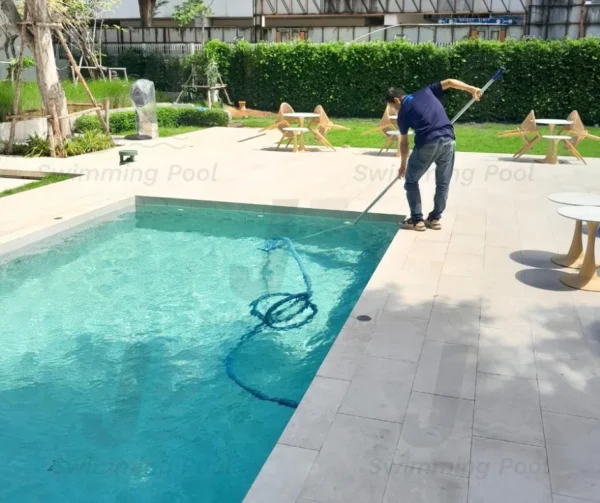
Daily Maintenance
Remove leaves and debris floating on the water surface.
Check that the water level is approximately halfway up the skimmer opening.
Check that the suction at the skimmer is working properly.
Weekly Maintenance
Clean the skimmer basket.
Brush the pool walls and floor.
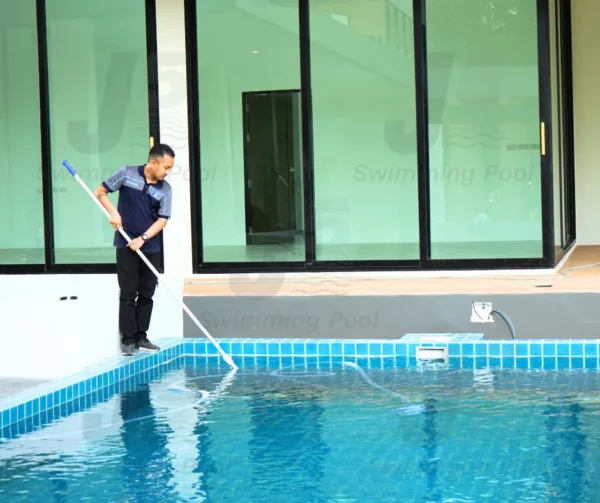
Vacuum the pool floor to remove sediment and debris.
Test the pH and free chlorine levels and adjust them to the recommended range.
Monthly Maintenance
Clean the filtration system. For sand filters, perform a backwash.
Inspect the pool pump, valves, and connections for leaks.
2. Overflow System
Requires more maintenance than a Skimmer System due to the overflow channel and balance tank.
Daily
Weekly
Monthly
Focuses mainly on keeping the water surface clean and is easy to maintain.
Daily: Remove leaves and debris, check the water level (halfway up the skimmer opening), and check the water suction.
Weekly: Clean the skimmer basket, brush the pool walls and floor, vacuum the pool, and check and adjust pH and chlorine levels.
Monthly: Backwash the filter, and inspect the pump, valves, and connections for leaks.
Requires more detailed maintenance due to the overflow channel and balance tank.
Daily: Remove debris from the overflow channel, and check the water level and float valve in the balance tank.
Weekly: Clean the overflow channel, clean the balance tank if sediment has accumulated, brush the pool walls and floor, vacuum the pool, and check the water chemistry.
Monthly: Backwash the filter, inspect the pump, valves, and automatic water-filling system, and thoroughly clean the balance tank.
The best choice for limited spaces. The water level is slightly below the pool edge, with built-in surface skimmers. It does not require an overflow gutter or balance tank around the pool, saving valuable space and reducing installation costs.
To keep your pool safe and clear during the rainy season, check and rebalance the water chemistry immediately after heavy rainfall, clean the pool, and run the filtration system for longer periods.
Rainwater can lower water quality and may carry dirt, algae spores, and other contaminants into the pool.
Follow these steps to keep your pool clean and clear:
Rainwater can dilute pool chemicals and quickly affect water balance. Test the water at least twice a week or after heavy rainfall.
J5’s Key After-Sales Services
In addition to equipment repair, J5 offers long-term Pool Maintenance Services for residential pools, hotels, and cafés, including:
Designing a swimming pool that is safe, attractive, durable, and built to appropriate standards requires careful consideration of its intended use and budget. The key factors include:
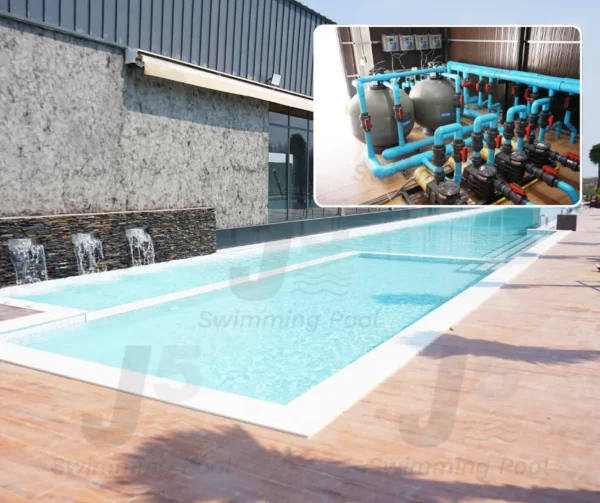
Over 22 Years of Proven Experience

Contact Channels
E-mail info@j5-swimmingpool.com
Call Center
02-277-1345 / 061-796-6649